
The publication of PorcaLunya, the latest work by David Serramitjana, has hit the Catalan industrial and political ecosystem like a depth charge.
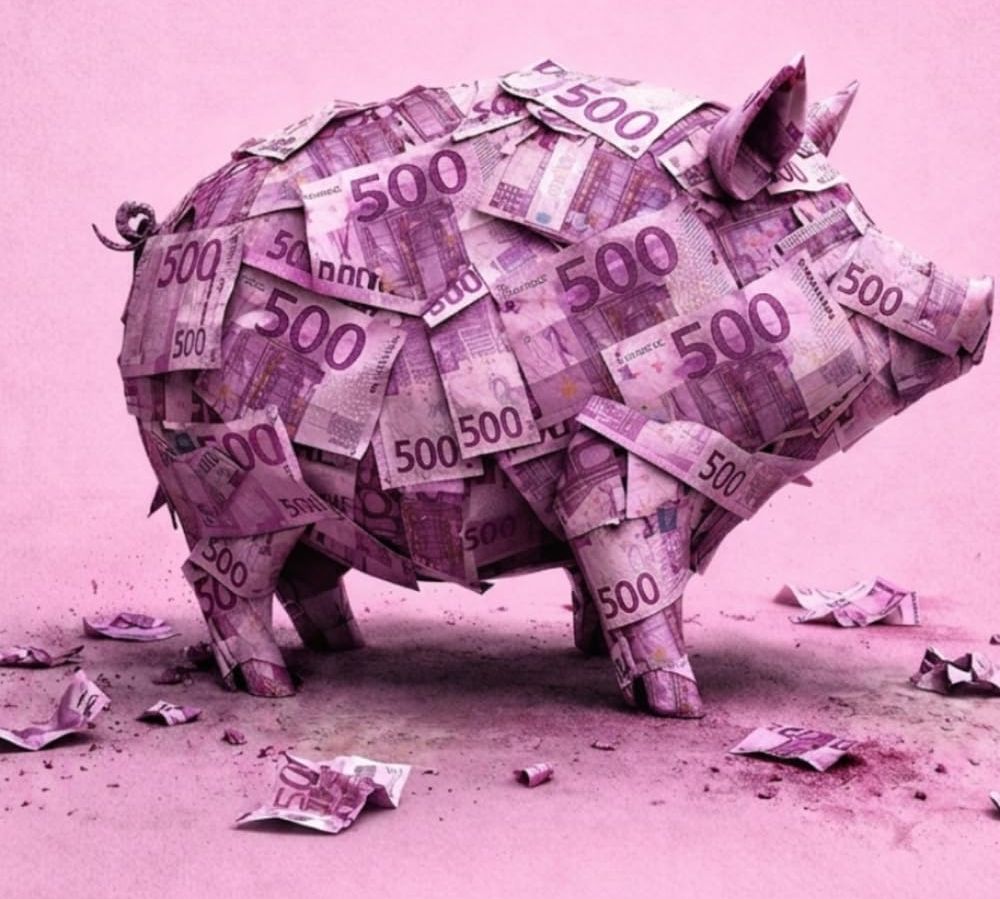
What superficially presents itself as a noir thriller is immediately revealed as a forensic X-ray of a country that has mistaken growth for territorial parasitism.
Fiction Dismantling Propaganda
The December 2025 imagined by David Serramitjana —a country collapsed by a swine health crisis— is not a distant dystopia, but a technical probability. While the industry giants flood us with high-budget greenwashing campaigns, the reality of official registries shows a hyper-exploited Catalonia where livestock density threatens aquifers and biodiversity.
Nodes of Power: From the Farm to Parliament
The value of PorcaLunya lies in its capacity to describe the web that permeates everything. We cannot understand the expansion of corporate groups such as Noel or Monter without analyzing their influence on political decision-making structures. Figures like Salvador Vergés, spokesperson in Parliament with a past deeply linked to the core of this industry, act as transmission belts that align the public agenda with the interests of the meat lobby.
Philanthropy or Media Shield?
The article focuses on a phenomenon that Serramitjana implies in his plot: the use of corporate social responsibility as a protective shield. This is what we call the «misappropriation of prestige»: using noble causes to shield an intensive production model that is destroying the territory at an accelerating pace.
The ICF and the Easy Credit Bubble
Serramitjana asks who pays the price. And the answer is found in the offices of the Catalan Institute of Finance (ICF). While the real productive fabric—the one without access to the inner circles of power—struggles to survive, the system guarantees the flow of capital to the companies that already dominate the market. It is a closed loop: subsidies for innovation in farms that invoice hundreds of millions of euros while the «swinocracy» consolidates itself as the only permitted model.
PorcaLunya is, ultimately, an uncomfortable mirror. David Serramitjana warns us that when the system protects itself by sacrificing the truth, collapse is no longer an option, but a timed certainty. In a country sustained by dark interests, reading this book is no longer an act of leisure, but a necessary exercise in self-defense.
The Book
The system has a traceability flaw that nobody wants to admit. On November 25, 2025, an outbreak of African Swine Fever is detected in Bellaterra [1], which is not just a health crisis; it is the trigger for a systemic collapse. In a matter of hours, the EU sealed borders, and the «swinocracy»—the backbone of a Catalonia inflated by easy credit and opaque privileges—began to crack under its own weight.
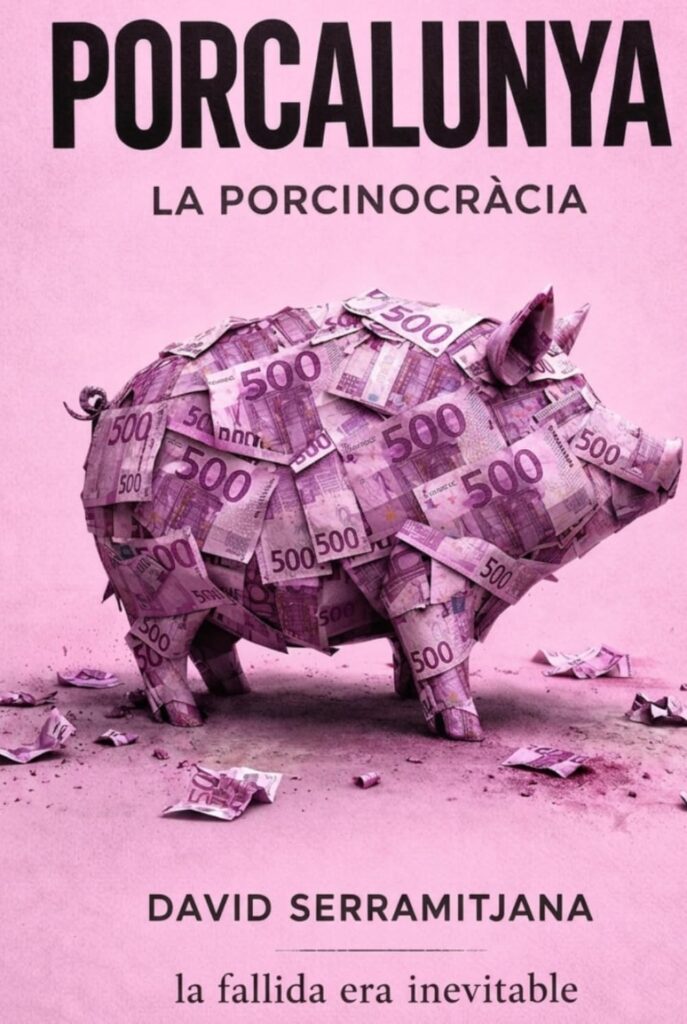
While the official narrative rushes to find a scapegoat and demands patriotic unity, Blanca, a nurse and activist, detects a much more uncomfortable truth among the remains of the disaster. It is not an accident; it is the result of a network of institutional silences, genetic manipulations and luxury offices where the territory is sold to the highest bidder. With the country militarized and biometric recognition technology monitoring every breath, Blanca will find herself trapped in a spiral of sabotage and leaks. Blanca, in alliance with operational networks of unexposed action, executes the strategic sabotage of livestock infrastructures. This intervention aims to definitively deactivate the hegemony of the meat lobby, neutralizing the discourse and the control architecture that this industry has imposed in favor of its interests. In this human hunt, the lobbies do not seek the cure, but the total control of the evidence.
PorcaLunya is not just a contemporary noir thriller; it is a forensic anatomy of the sewers of a country where power and territorial parasitism go hand in hand. A thrilling story that reminds us that when fear is what governs, truth is the first sacrifice demanded of the population.
When the gear is rotten from the inside… who really pays the price?
Fèlix Domènech de Larraz
Freelance and Cosmopolitan Editor
Editorial Cultura Vegana
www.culturavegana.com
BIBLIOGRAPHICAL SOURCES
1— Serramitjana, D. (2025). PorcaLunya. Editorial Llibres del Delicte.
2— Department of Climate Action, Food and Rural Agenda (2023-2024). Data on the pig sector in Catalonia. Reports on livestock density and swine population. [Access to open data of the Generalitat].
3— Catalan Water Agency (ACA). Report on the state of groundwater bodies in Catalonia: Nitrate contamination.
4— Catalan Institute of Finance (ICF). Annual report of activity and allocation of credits to the agri-food sector.
5— Friedrich, B. (2024). Carne: Cómo la próxima revolución agrícola transformará el alimento favorito de la humanidad y nuestro futuro. The Good Food Institute / Penguin Random House.
6— Audit Office of Catalonia (Sindicatura de Comptes). Audit reports on public subsidies and aid to the meat sector.
7— Swine Industry Yearbook (2023). Ranking of turnover and export: Noel, Monter, and Casademont Groups.
This analysis has been audited through the data traceability of ALMA AE, created and developed by the FOC Foundation, cross-referencing the official records of the ACA with the industrial licensing concessions in La Garrotxa. The FOC Foundation has already formally requested the traceability of its investments from the ICF to verify whether public capital sustains the ‘swinocracy’ that Serramitjana denounces.
Share Porcalunya with your contacts.